Valle de Guadalupe
A Destination for Celebration
By Paulina Berkovich
Photos by Jorge Jaime
 For travelers celebrating a special occasion, Mexico’s Valle de Guadalupe is the perfect destination for wine lovers: it offers unforgettable scenery, extraordinary cuisine, luxurious accommodations and welcoming locals eager to share their love and pride in their country. Whether it’s a birthday, an anniversary, or just a few days to relax with friends or that special someone, any reason is an opportunity for a visit to paradise. Choose from a variety of local vineyards and restaurants and see for yourself why travelers all over the world are seeking out Mexico. BajaTraveler’s Martha recently celebrated her birthday with a weekend visit to what we consider is the very best of the region… enjoying a two-night stay with her boyfriend Jorge at luxurious Encuentro Guadalupe.
Friday: An Unforgettable Stay at Encuentro Guadalupe
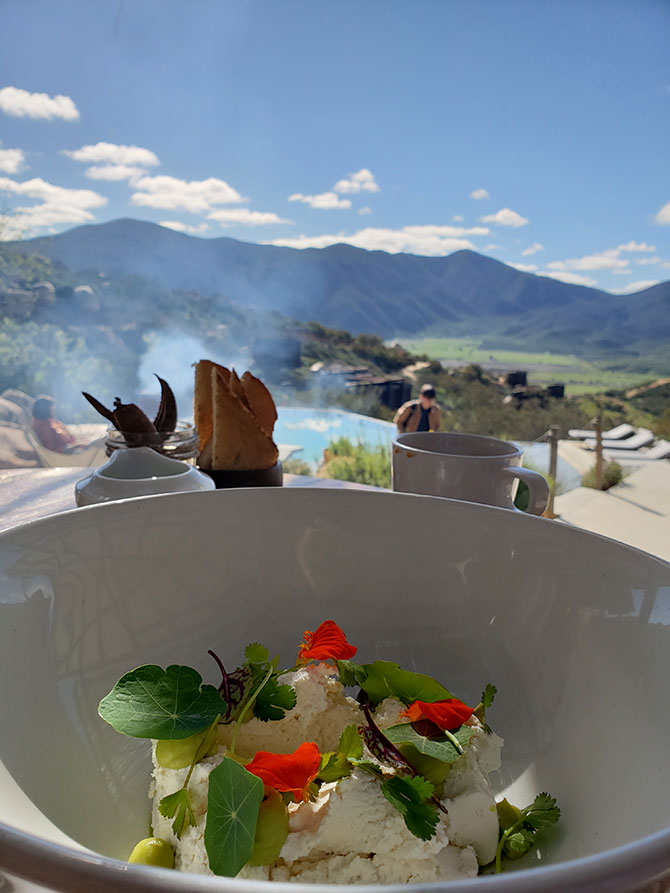
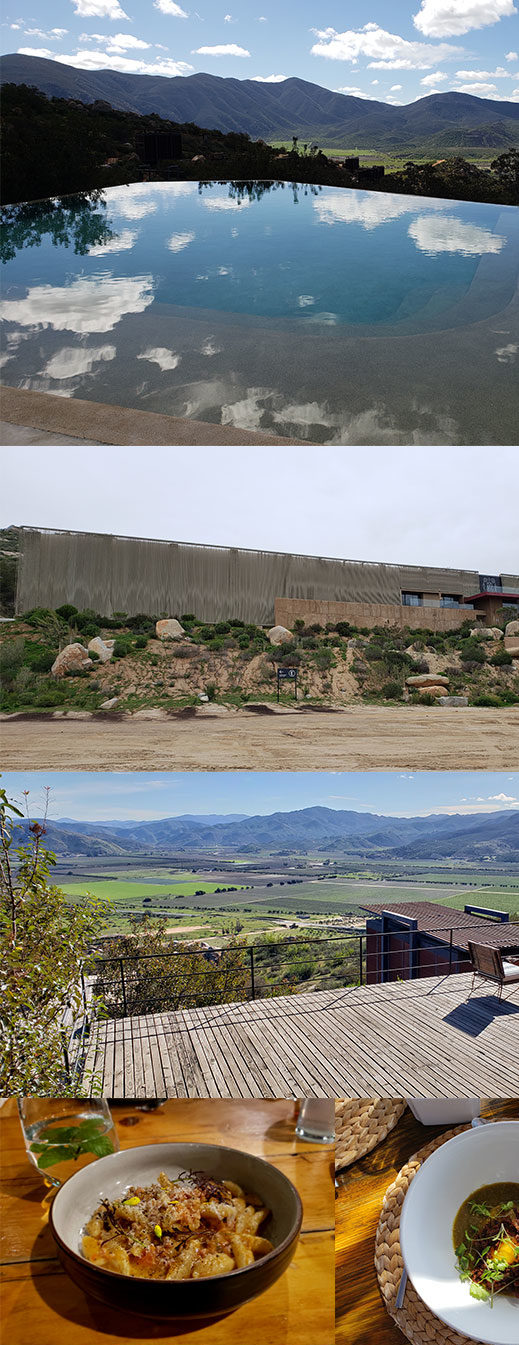
The beauty of the property stands out from the moment travelers arrive – and seeing it by the light of the sun is even more extraordinary. Contemplating the perfection of the valley, your soul will be filled with its magic. The hotel’s architecture gives guests a sense of relaxation and freedom. Fluffy cotton-white clouds complete the picturesque scenery. Martha had a permanent smile on her lips the whole weekend. Nothing seemed too cold, too hot, too fast, or too slow. Although she arrived with her boyfriend an hour later than planned because of an unexpected delay, they were still welcomed with a gastronomic feast at Origen Restaurant. Chef Omar selected a special menu to captivate their palates, with wines that paired the dishes perfectly, including a versatile pour from Château Camou that was an ideal accompaniment for many of the courses.
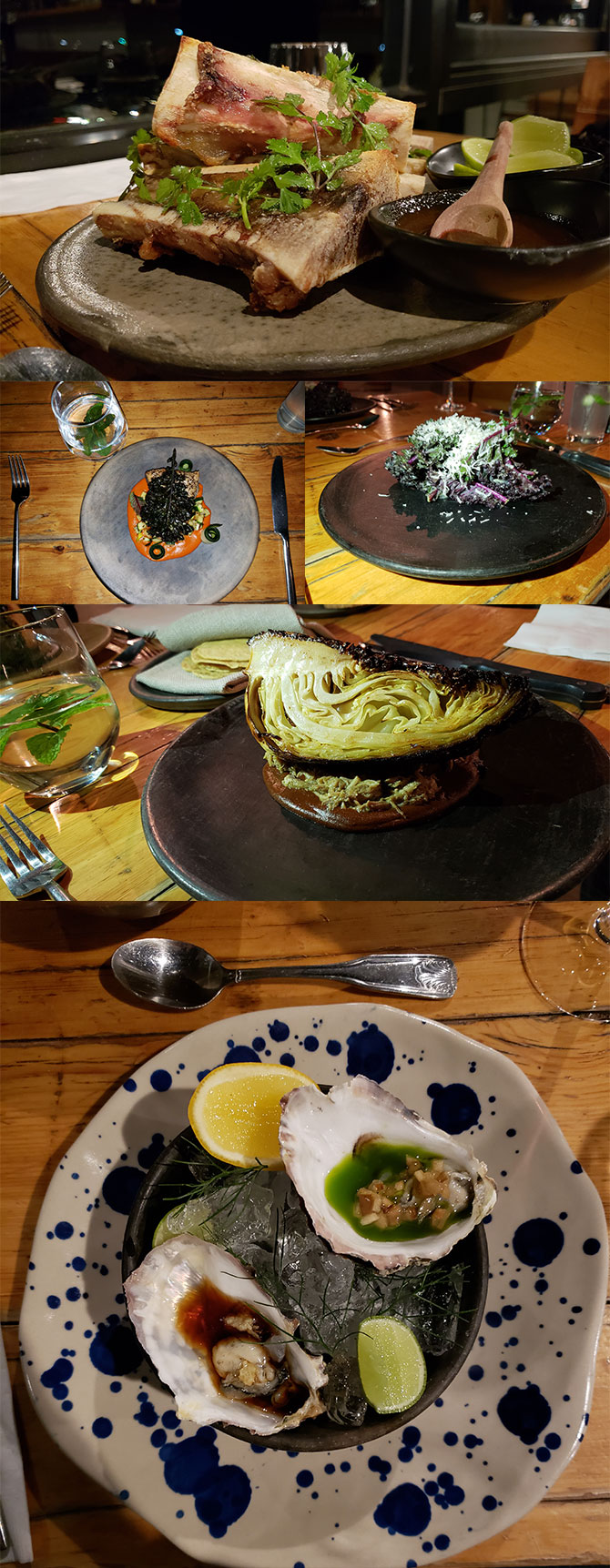
Every dish at Origen has a special spark that lends a touch of originality. Each detail of each small plate is carefully planned to surprise and delight. In taste and presentation, the meals served at Origen are worthy of a culinary competition, and the service is attentive and fast. After a dish with an intense green salsa prepared with cilantro oil and smoked apple, the expectations for the dinner changed for Martha, and she knew that she was enjoying an elite-level meal.
A course of cabbage with a bed of pork carnitas in green salsa over a sauce of black beans and habanero chile, all with fascinating textures, was exceptional. Martha wrote: “I can assure you that this dish was the best I have ever tried in my life. I have the good fortune to travel, taste and enjoy different types of cuisine, to appreciate the art of eating well. This dish for me is the most fun and distinctive. The experience at Origen was marvelous, and I never wanted it to end.”
Just when Martha thought the meal could not get any better, another plate arrived, a house-made cavatelli accompanied by a ragu sauce and Italian sausage. The feast ended with churros, with perfect creaminess and sponginess, accompanied by an exquisite dulce de leche. It was simply the perfect dessert, perfect portions. A truly spectacular dinner, a great welcome to Encuentro Guadalupe.
The accommodations are just as extraordinary. From the beautiful cabin – spacious, impeccable – guests can marvel at views of the beautiful Valle de Guadalupe. Hearing birds everywhere and admiring the colors while wandering the paths: all tourists wear smiles on their lips, experiencing a truly magical place. Mexico is marvelous, everything is within reach. It’s only a question of taking the time to experience it. As Martha wrote: “Walking through the lanes was another experience. The scent of the herbs transported me to my grandmother’s house – a fresh scent, full of memories of my childhood. And my smile was even bigger.”
Saturday: Sampling the Region’s Award-Winning Wines as a VIP
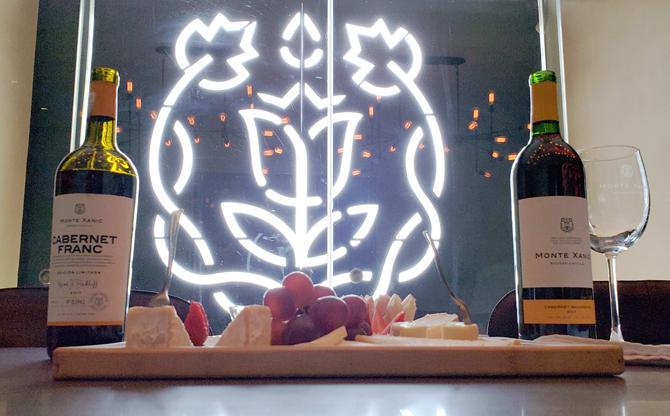 Working for “the” regional travel magazine has its perks… Monte Xanic and Château Camou are two of the finest wineries in the Valle de Guadalupe, and their success is bringing renown to the entire region. When Martha visited Monte Xanic, a sommelier was waiting to receive her with lots of enthusiasm and detailed explanations of each of the wines she had an opportunity to try. A private tasting included spectacular regional cheeses. Videos described the wine-making process and detailed the company’s sales figures. Monte Xanic envisions selling 100,000 bottles in 2020 – an ambitious number but one that will allow the winery to satisfy more and more customers with its outstanding products.
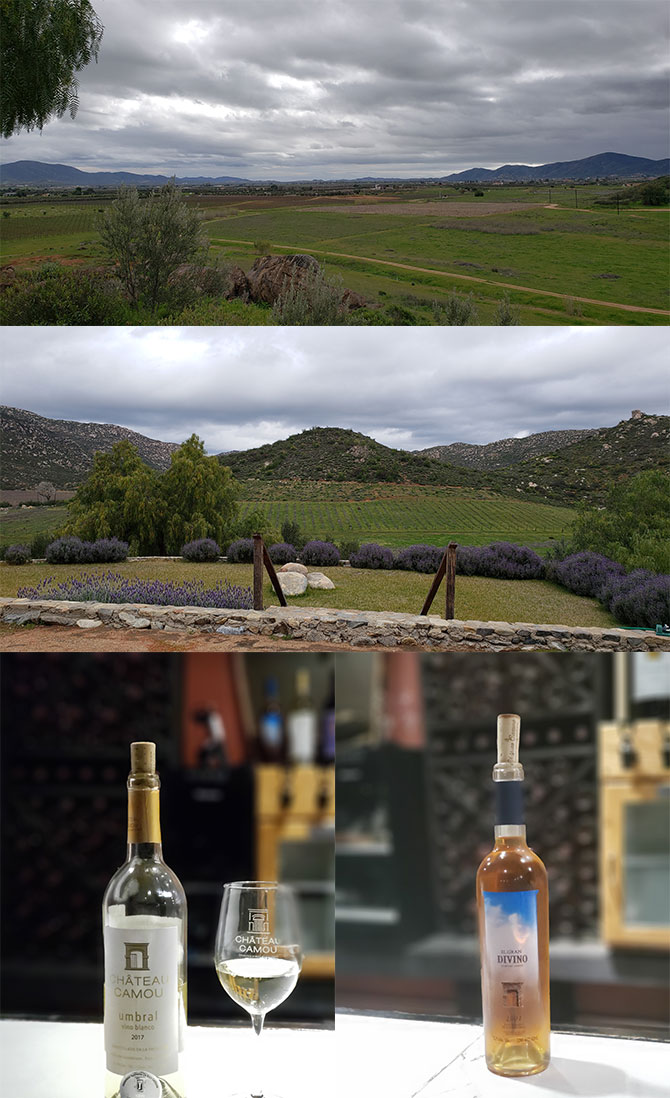 Château Camou has received many international awards of great importance in the world of wine, such as Brussels 2017 and 2018, and their latest – most impressive is a gold medal in the Grand Bacchus – a Spanish competition, the first Mexican wine to win this gold award. Because of its success, the world is paying more attention to the wines of the valley. Visitors to the winery are guaranteed to enjoy themselves. The architecture is visible from the road – a mansion of adobe and brick, surrounded by breathtaking scenery. Martha wrote that Inocencio, the manager who greeted her, recounted how the winery began as a family business in the 80s. As he discussed the wine-making process in detail, his passion for wine and his love for Château Camou were clear. He described the way they harvest their white grapes at night to avoid starting the fermentation process, their careful treatment of the grapes, with a weight of no more than 12 kilos per basket, and the selection and separation of the grapes. When he spoke about the wine, he communicated more than an explanation – he expressed the very essence of Château Camou. Martha could not resist buying a bottle of “el Gran Divino” – a sweet wine as a gift. Château Camou was a unique experience, her favorite of the vineyards she visited over her weekend in the Valle de Guadalupe. She wrote: “I will definitely return to taste its other wines and spend more time in its spectacular cellar, certainly original with the arrangement of its bottles, one of them forming the map of our Mexico.”
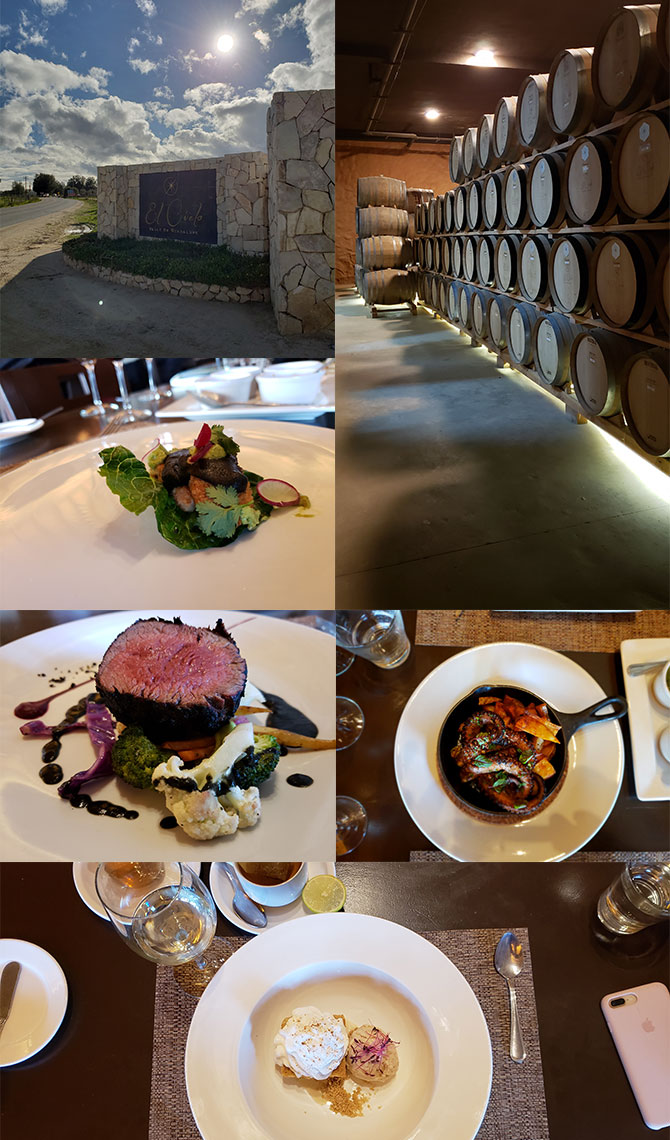 El Cielo is another popular destination, so travelers should expect crowds. There may even be a few unexpected sights, like a mariachi band celebrating newlyweds or a helicopter bringing guests. But it’s worth making time to sample the exquisite food at their Latitud 32, a fusion of Yucatan and Baja California, balanced in aroma and flavor, like octopus prepared in the Yucatan style, with spices, olive oil and a little habanero chile, accompanied by colorful, beautiful truffled potatoes. According to Martha, this dish alone would be reason enough to return. But there’s more – an extraordinary variety of sauces, such as habanero salsa or butter with a touch of paprika. For a main course, visitors can enjoy a magnificent Mayan-style fish fillet, accompanied with local vegetables and potato puree. And those with a sweet tooth should leave room for a dessert trio that includes horchata ice cream, horchata tres leches and horchata foam, putting the spotlight on a local tradition. Martha had time for a quick tour of the winery. She recommended Andromeda for white wine and Kepler for red wine. El Cielo has beautiful villas where one can stay for a day – or two…
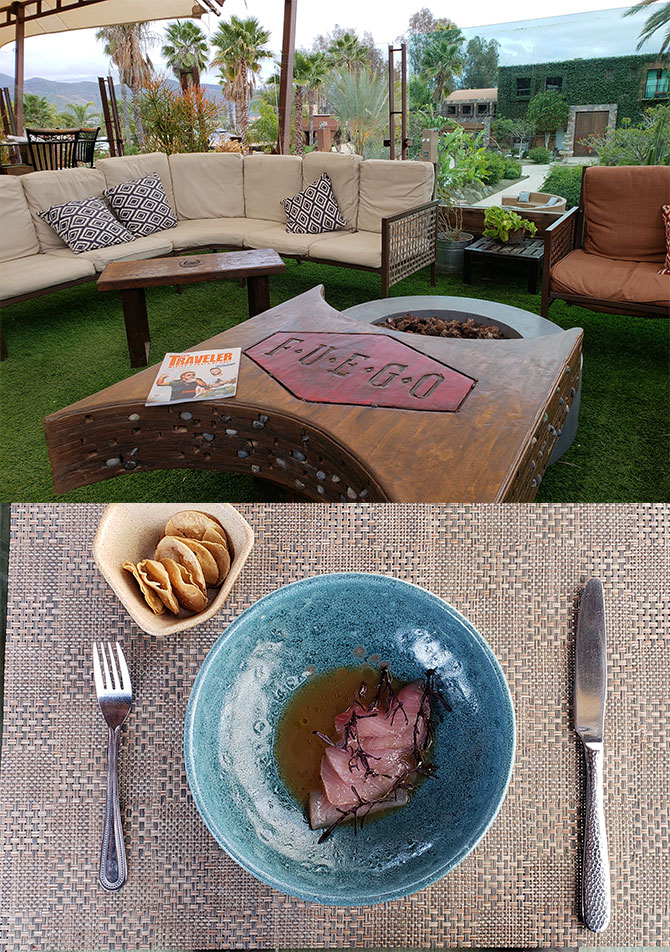 To round out the day, consider dinner at Fuego Cocina del Valle, the restaurant inside the Hotel Boutique Valle de Guadalupe, on a lovely terrace with a view of the valley. Don’t let a chilly evening stop you: Martha wrote that Victor, her waiter, kindly brought her a heater so that she could enjoy her meal even with a cold wind. Many of the dishes surprised and delighted. One included an unusual combination of fish with lamb. Another original was a beetroot salad with honey, feta cheese and walnuts. The star of the meal, however, may be the dessert, a small corn biscuit with caramelized beaches and a touch of cardamom, almonds, mezcal foam and dulce de leche. Martha explained it this way: “Every mouthful was a trip to another dimension.”
Sunday: More Captivating Cuisine
At Cocina de Doña Estela, it’s not unusual to see long lines of travelers waiting for an hour or even more to enjoy the unique hospitality that characterizes Mexico. The crowds confirm yet again how its culture and cuisine have captivated the entire world. But if you arrive at the right time, you may be able to enjoy a peaceful meal. Martha wrote that when she arrived around 8:00 in the morning, she was attended by a gentleman with white hair and a smile named Don Rutillo, brother-in-law to Doña Estela, the owner of this restaurant. None of the other places she visited had such a variety of international guests. In the table behind her there was a French family, next to her a family from the United States, and on the other side a family that based on the accent must have been British. With such a great variety of items on the menu, everyone will be able to find something to their taste – the trouble is having to choose! Dishes range from a spectacular elote hotcake to a chicharron omelet with green salsa.
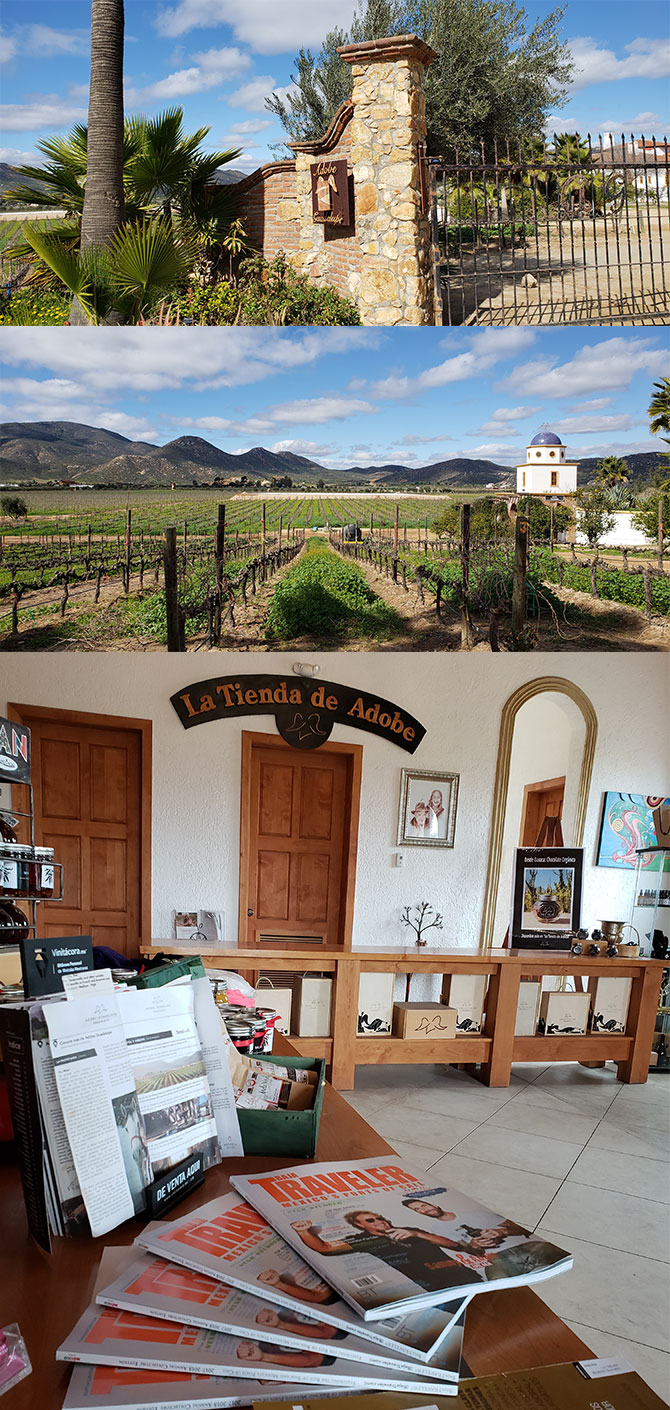 For travelers looking to wrap up the weekend with a final winery visit, Adobe de Guadalupe has great personality. Along the route, a large number of muscular horses graze in the pasture, enjoying the bounties of the land. This vineyard has a large property and is also the site of a hotel, which has rooms named after the wines. Try Uriel, a rose that holds a great surprise for the palate. Martha had high praise for Secret Garden, a tempranillo, which she truly enjoyed: a special wine, with no need for food to be able to enjoy it. Exquisite olive oil is also produced in house. Martha had an amazing weekend and in her own words…
“We are so grateful for each one of the places we had the fortune to enjoy and to every single person that gave us their tenderness, time and knowledge. We celebrated life, my birthday, experiences, love and got to know a bit more of our Mexico, its wines, its cuisine and most of all the beauty of its people.”
A weekend visit to Valle de Guadalupe is a celebration of life, a treat for all the senses. With the views and the cuisine, there’s no better place to relax and discover the allure that this region of Mexico has for travelers the world over.